A file labelled "NET past paper" can be useful practice without being an official copy of the test. Most material shared under that name consists of questions reconstructed from what candidates remember.
Treat recalls as a source of question styles and topics to review, not a script for the next paper. Wording, options and answer keys can be incomplete. The useful habit is to check the method rather than trust an answer because the file has a familiar date or logo.
Use a recall to check understanding
Attempt a recall question before reading the key. If the wording leaves two reasonable interpretations, identify the missing condition rather than memorising a disputed answer.
Check uncertain points against the relevant textbook. For Mathematics and Physics, work through the calculation or model. For recall-heavy subjects, verify the definition or process.
Keep recalls alongside chapter practice and timed work. A pile of dated PDFs does not tell you which weak concept to study next, and repeated questions are not guaranteed on a future paper.
Understand how a recall is reconstructed
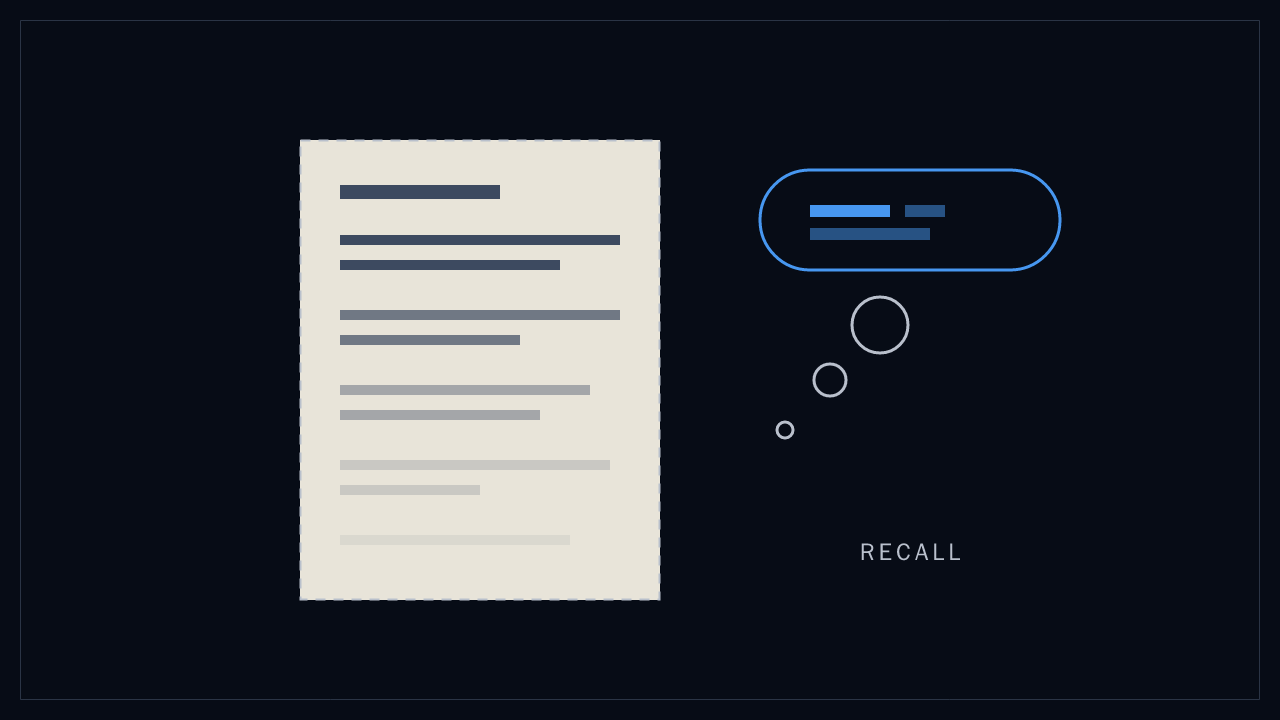
After a series, candidates share the questions they remember on groups, forums and social media. Someone collects them, types them up, adds options and often adds an answer key. Those files then get copied between sites, renamed and merged.
That process explains their limits:
- Wording drifts. A student remembers the idea of a question, not its exact numbers or options.
- Options get invented. If a student recalls the stem but not all four options, the compiler fills the gaps.
- Keys are someone's guess. The person who typed the key may not have solved it carefully.
- Dates get lost. A file passed between three sites rarely keeps the series it came from.
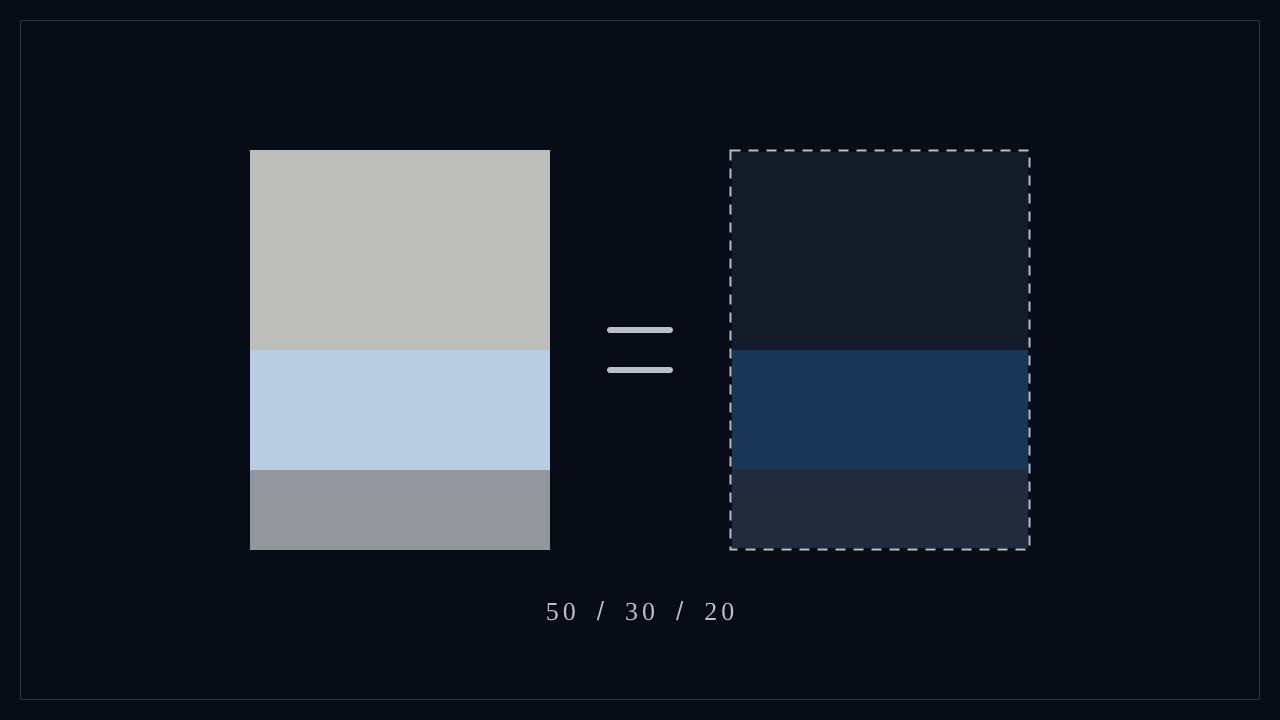
- Patterns go stale. NET-Engineering is now Mathematics 50%, Physics 30% and English 20%. Compilations from before the 2025 change still drill Chemistry, Computer Science and Intelligence sections that the Engineering paper no longer has.
Handle uncertain wording and keys
Treat each recall question as "a question on this topic appeared, in roughly this form". Don't treat it as the exact text.
Topic-level information holds up best. If ten compilations from different years all include a question on, say, definite integrals or projectile motion, that topic is worth your time. Exact numbers and options hold up worst.
The keys need the most care. If your answer disagrees with the key, solve it again from the textbook. Often the key is wrong.
Your next step
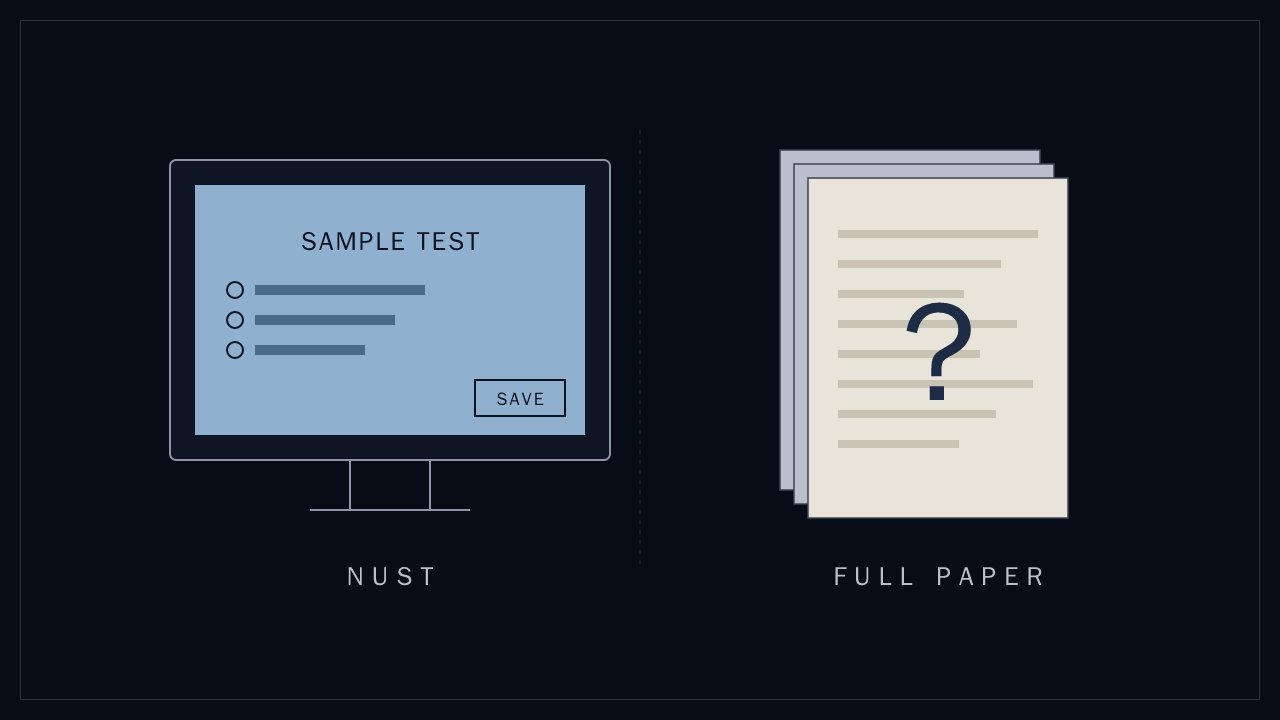
Use recall MCQs to discover topics you need to revisit, then go to chapter practice for that work. Read the official sample-test guide to distinguish familiarisation from practice material.
For exam rehearsal, use full papers matching your category. No private source should be treated as an official leaked or predicted NET paper.
Sources and scope
- NUST doesn't publish NET papers or provide preparation material
- NUST's free official practice is the sample test on its admissions portal
Source: NUST UG admissions portal and FAQ; NUST subjects included in NET with weightings page; SailToNUST past MCQs collection; checked October 2026