Reading a Biology chapter twice can leave you feeling familiar with it without being able to answer a question a day later. NET preparation needs recall you can produce, not only text you recognise.
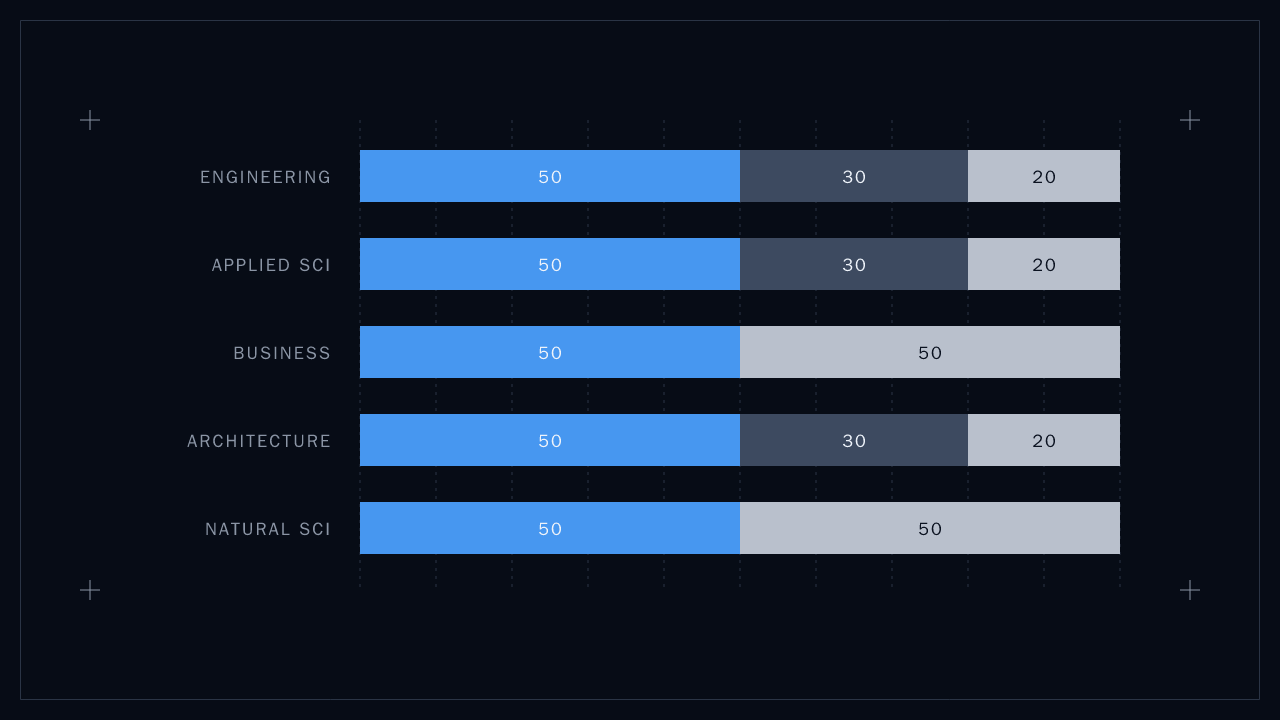
Biology carries half the published weight of NET-Applied Sciences. Prepare it by explaining processes, distinguishing similar terms and testing yourself away from the page. Keep Chemistry and English in the plan rather than letting Biology absorb every available hour.
Test recall away from the textbook
After a short reading, close the book and reconstruct the process or diagram. What happens first, what causes the next step, and what changes if one part fails? Check the textbook after you have tried to recall it.
Group confusable ideas together: a hormone and its gland, a structure and its function, or two stages of a cycle. Write the difference that would decide an MCQ, rather than copying long descriptions.
Return to older topics during the week. A question answered correctly immediately after reading is useful, but a correct explanation several days later is a better check of retention.
Find a chapter to revise
The table groups the chapters the way they hang together. Counts are what our bank holds, which tells you where you can drill. They are not NUST's exam frequencies.
| Block | Chapter | MCQs in our bank |
|---|---|---|
| Human physiology | Skeletal and muscular systems | 210 |
| Human physiology | Circulatory system | 169 |
| Human physiology | Reproductive system | 158 |
| Human physiology | Thermoregulation and osmoregulation | 148 |
| Human physiology | Nervous system | 129 |
| Human physiology | Digestive system | 105 |
| Human physiology | Respiratory system | 61 |
| Human physiology | Endocrine system | 37 |
| Cell and molecular | Cells and subcellular organelles | 122 |
| Cell and molecular | Chromosome and DNA | 103 |
| Cell and molecular | Molecular biology | 100 |
| Cell and molecular | Bioenergetics | 85 |
| Cell and molecular | Enzymes | 52 |
| Cell and molecular | Biotechnology | 52 |
| Genetics | Inheritance | 120 |
| Diversity | Biodiversity and classification | 515 |
| Diversity | Bacteria and viruses | 77 |
| Environment | Ecology | 217 |
| Plants | Plant physiology | 20 |
Practise more than isolated definitions
Name the term. "The mechanism that keeps the internal environment within set limits is called?" Homeostasis. Many stems end in a blank and the options are lookalike words.
Structure and feature. "The gelatinous layer between ectoderm and endoderm in cnidarians is?" Mesoglea. "Around each thick myosin filament, how many thin filaments sit?" Six.
Disease and cause. "Typhoid is caused by?" Salmonella, a bacterium. "Vitamin A deficiency causes?" Night blindness.
Genetics. "Red-green colour blindness is inherited as?" An X-linked recessive trait. Cross questions ask for a ratio: Aa × Aa gives 3:1 by phenotype and 1:2:1 by genotype.
Process names. "Secretion of waste from the blood straight into the filtrate by active transport is?" Tubular secretion. "Breaking kidney stones with shock waves is?" Lithotripsy.
If you are sitting MDCAT as well, use Premeth's chapter-wise Biology MCQs from MDCAT past papers for the medical-entry side of your revision. Match each practice chapter to the syllabus for the test you are preparing.
Your next step
Choose a weak topic from Biology practice, attempt the questions and explain why the wrong options are wrong. That can reveal confusion hidden by a familiar correct answer.
Pair the work with the Chemistry guide and English guide. Check the paper requirements before using a mixed mock, since SailToNUST's full papers currently cover Engineering.
Sources and scope
- NET-Applied Sciences is Biology 50%, Chemistry 30%, English 20%
- About 100 biology questions is derived from the 200-MCQ total. NUST publishes percentages only
Source: NUST, Subjects included in NET with weightings, checked October 2026. Bank counts from the SailToNUST question bank.