Heat and temperature are related, but they are not interchangeable. That distinction matters when you choose between a temperature-change calculation, a phase-change calculation and an energy balance for a gas.
Thermodynamics also demands a consistent sign convention. Decide what counts as work done by the system before putting values into the first law, then keep that convention throughout the question.
Choose the method before calculating
Identify the process and the system. During a phase change, energy can enter without raising the temperature. For an ideal gas, an isothermal process and an adiabatic process impose different conditions.
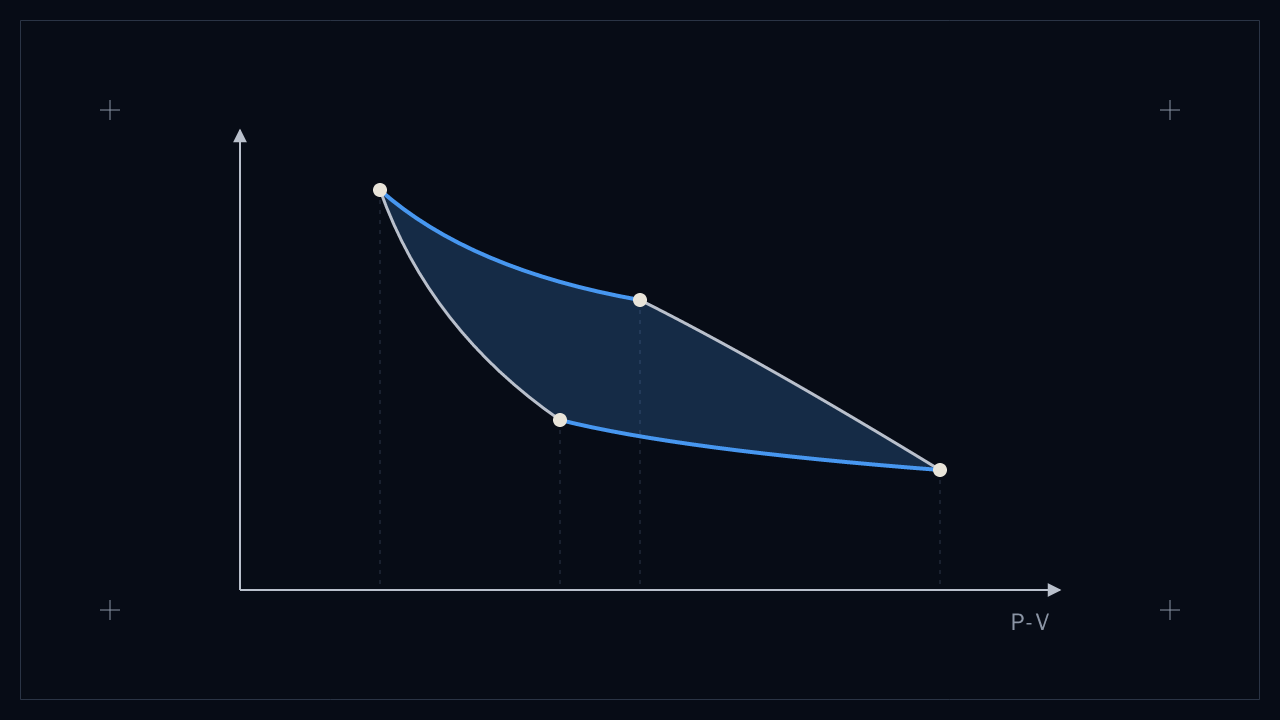
When a pressure-volume graph appears, read the path and the enclosed or underlying area. Use absolute temperature in gas-law calculations, rather than Celsius values.
Formula reference
These relationships need the conditions stated in the question. Check units, signs and any restrictions before substituting values.
Kelvin                T(K) = T(°C) + 273
Fahrenheit            F = (9/5)C + 32
A change of 1 °C equals a change of 1 K

Heat                  Q = mcΔT           c in J kg⁻¹ K⁻¹
Latent heat           Q = mL             L in J kg⁻¹
Mixing (no losses)    heat lost by hot = heat gained by cold

Ideal gas             PV = nRT           R = 8.31 J mol⁻¹ K⁻¹
Fixed amount of gas   P₁V₁/T₁ = P₂V₂/T₂
Pressure from KE      P = ⅓ρ v_rms²
rms speed             v_rms = √(3RT/M)   M in kg mol⁻¹
Mean KE per molecule  ½m v_rms² = (3/2)kT   k = 1.38 × 10⁻²³ J K⁻¹

First law             Q = ΔU + W         W = work done BY the gas
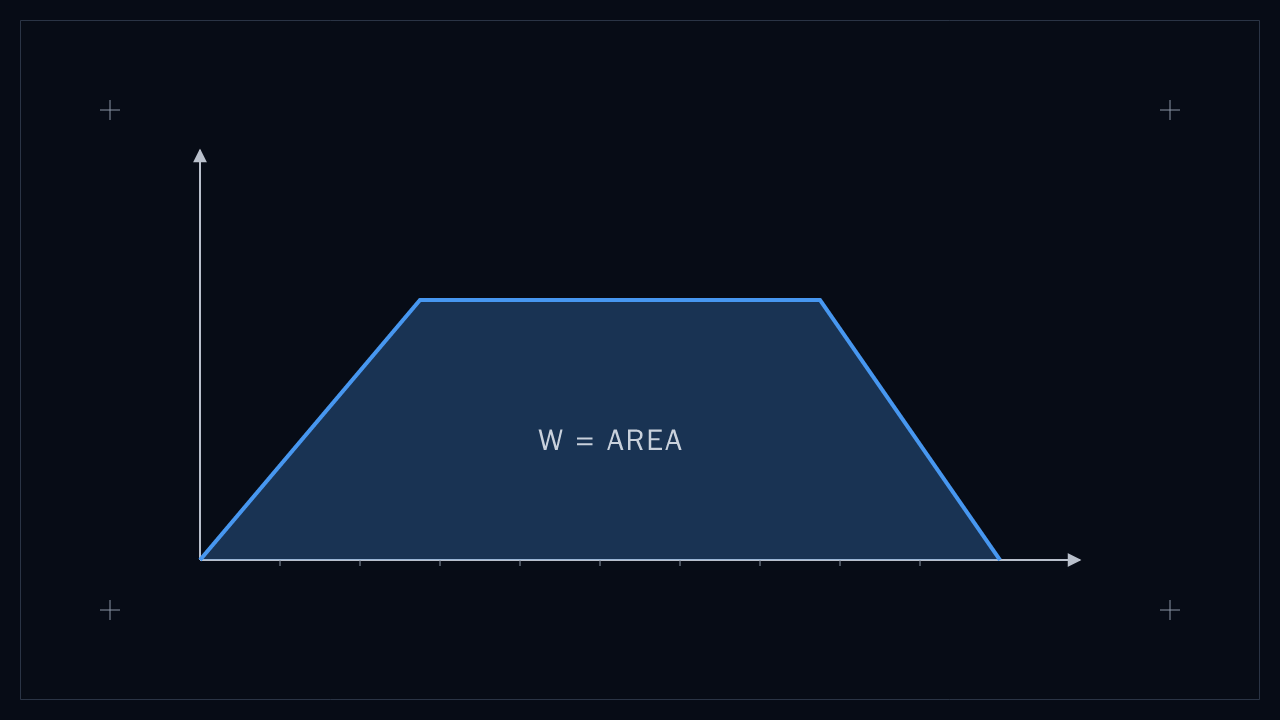
Work at constant P    W = PΔV  (in general, the area under the P-V curve)
Isothermal            ΔU = 0, so Q = W
Adiabatic             Q = 0, so W = −ΔU
Isochoric             W = 0, so Q = ΔU
Molar heats           Cp − Cv = R

Carnot efficiency     η = 1 − T₂/T₁      (kelvin)
Entropy change        ΔS = Q/T           J K⁻¹
Worked examples
Try each question before reading its solution. These are preparation examples, not official NET questions.
1. Doubling volume at constant pressure. An ideal gas at 27 °C is heated at constant pressure until its volume doubles. What is its final temperature?
(a) 54 °C (b) 200 °C (c) 300 °C (d) 327 °C
T₁ = 27 + 273 = 300 K
V ∝ T at constant P, so T₂ = 600 K
T₂ = 600 − 273 = 327 °C
Answer (d). Option (a) is what you get by doubling 27 °C directly.
2. rms speed ratio. The rms speed of a gas is 300 m/s. The molar mass is doubled and the absolute temperature is halved. What is the new rms speed?
(a) 300 m/s (b) 150 m/s (c) 600 m/s (d) 75 m/s
v_rms ∝ √(T/M)
T/M → (½)/(2) = ¼ of the original
v_rms → 300 × √¼ = 150 m/s
Answer (b).
3. Carnot engine. An ideal engine works between 527 °C and 127 °C. What is its efficiency?
(a) 24% (b) 50% (c) 76% (d) 100%
T₁ = 527 + 273 = 800 K,  T₂ = 127 + 273 = 400 K
η = 1 − 400/800 = 0.5 = 50%
Answer (b). Using °C gives 1 − 127/527, about 76%, which is option (c). It is there for a reason.
4. First law. A gas absorbs 500 J of heat and does 200 J of work on its surroundings. What is the change in its internal energy?
(a) 700 J (b) 300 J (c) −300 J (d) 200 J
Q = ΔU + W
500 = ΔU + 200
ΔU = 300 J
Answer (b). Check which sign convention the question uses. In the Pakistani textbooks W is the work done by the gas, so heat in and work out pull ΔU in opposite directions.
5. Mixing water. 0.2 kg of water at 80 °C is mixed with 0.3 kg of water at 20 °C. Ignoring losses, what is the final temperature?
(a) 44 °C (b) 50 °C (c) 56 °C (d) 36 °C
0.2 × c × (80 − T) = 0.3 × c × (T − 20)
16 − 0.2T = 0.3T − 6
T = 22 / 0.5 = 44 °C
Answer (a). For the same substance, the final temperature is the mass-weighted average: (0.2 × 80 + 0.3 × 20) / 0.5. The specific heat cancels. Option (b) is the plain average, which only works for equal masses.
Turn the examples into practice
Practise explaining why a formula applies before using it. Compare two processes with the same starting state so you can see which quantities depend on the path.
Use thermodynamics practice, review energy accounting in work and power, and keep the physics formula sheet for revision.
Sources and scope
- Use the official subject weightings to check whether this subject belongs to your NET category.
- NUST does not publish a guaranteed chapter question count. These examples are for learning methods, not predicting a paper.
Source: HSSC textbook topics and SailToNUST practice material; NUST subject weightings reviewed October 2026