A percentage question may use familiar arithmetic and still take too long because you are unsure what the percentage refers to. Quantitative Mathematics rewards careful translation as well as calculation.
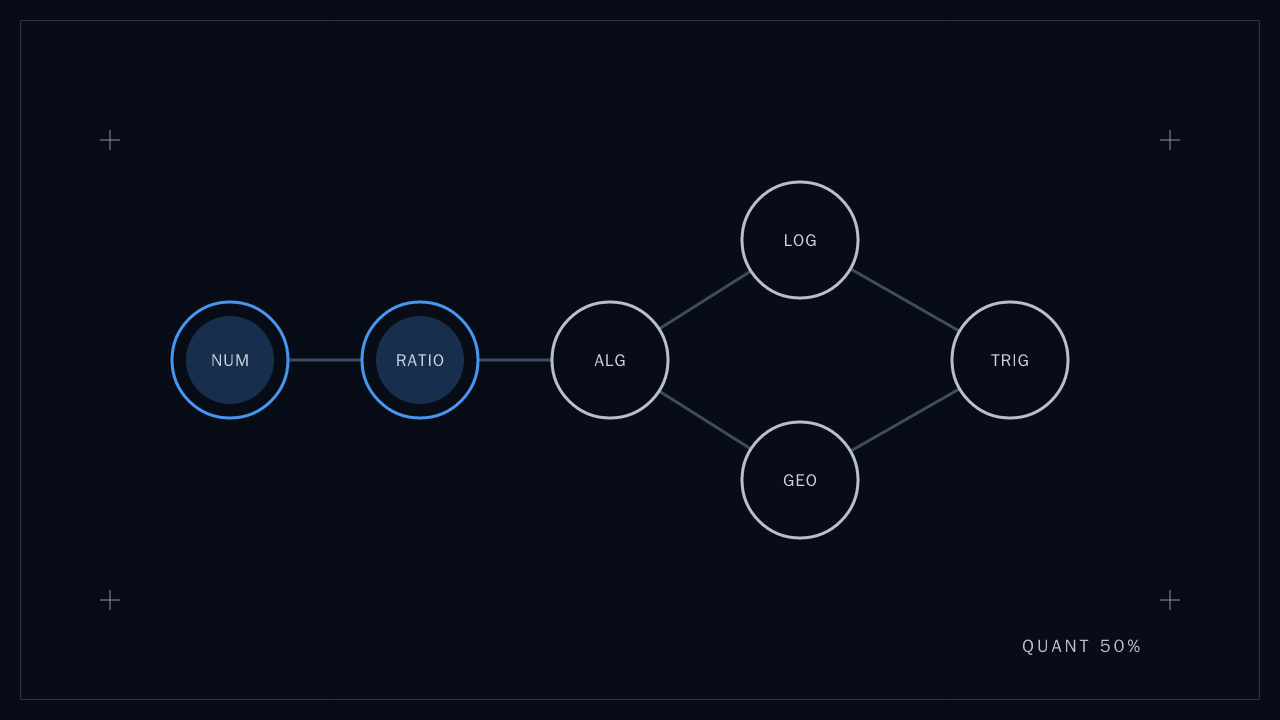
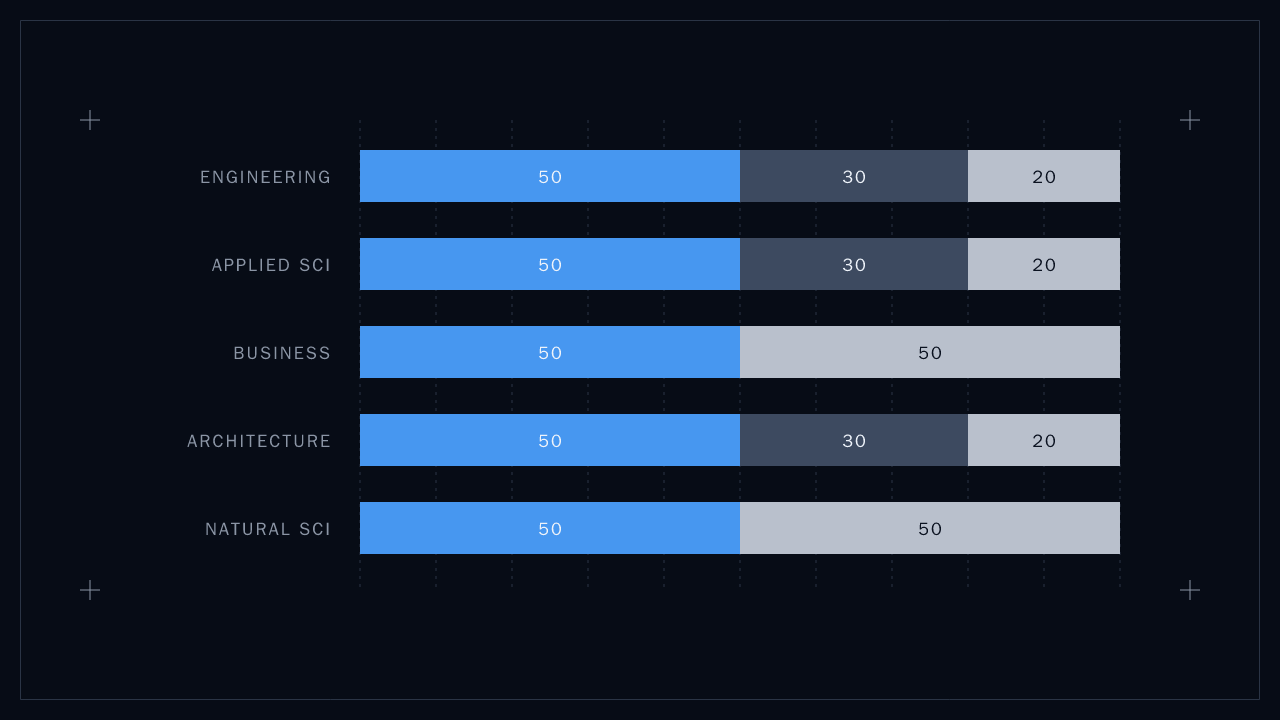
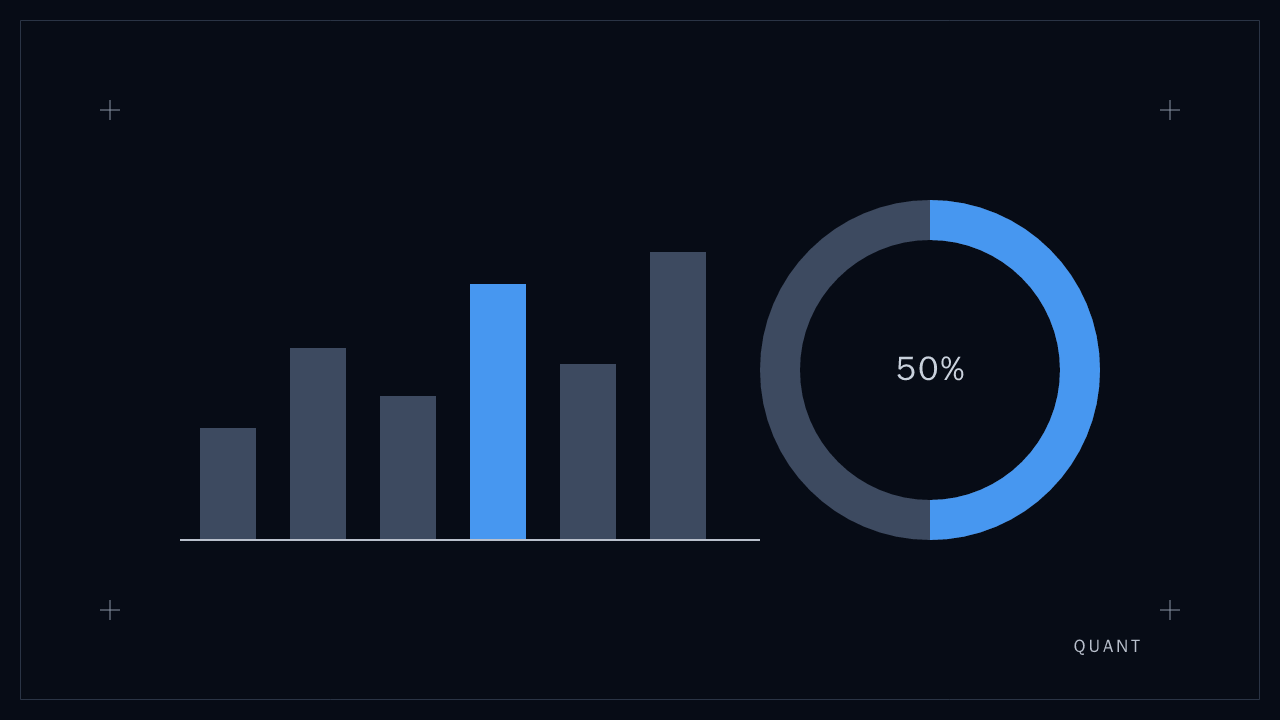
It carries half the published weight of NET-Business and Social Sciences, with English making up the other half. Start with number sense, ratios and algebra, then use mixed practice to learn when each method applies.
Translate before calculating
Read a word problem once for the situation and again for the quantity requested. Label the starting value, the changed value and the unit. For a percentage increase followed by a decrease, do not assume the two percentages cancel.
For geometry, sketch the stated information without assuming the figure is drawn to scale. For probability, define the possible outcomes before counting favourable ones.
If you have not studied Mathematics recently, begin untimed. Rushing uncertain arithmetic can reinforce the same mistake. Introduce a timer once you can explain the working.
Find the topics you need
Quant is a separate subject from the engineering mathematics paper. There is no differentiation, no integration and no conic sections. Our syllabus page lists eight chapters:
| Chapter | What it tests | MCQs in our bank |
|---|---|---|
| Geometry | Angles, triangles, circles, areas, often from a figure | 168 |
| Algebra and factorization | Identities, exponents, inequalities, word problems | 132 |
| Average | Means, ratios, percentages, simple interest | 131 |
| Functions, sets and number systems | Set operations, integers, place value | 67 |
| Trigonometry | Ratios at standard angles, quadrant signs | 35 |
| Logs | Laws of logarithms, solving log equations | 13 |
| Matrices | Determinants, singular matrices, identity | 11 |
| Probability | Dice, coins, selection from a group | 5 |
Our bank counts are not NUST's exam frequencies. They do show where most of the practice material sits: geometry, algebra and arithmetic make up 431 of the 562 questions.
Practise translating questions into maths
Identity shortcuts. "If x − 1/x = 4, find x³ − 1/x³." Use (a − b)³ = a³ − b³ − 3ab(a − b) with b = 1/x, so ab = 1. That gives x³ − 1/x³ = 4³ + 3 × 4 = 76. No need to find x.
Exponent bookkeeping. "If 5^w × 5^x = 5^y ÷ 5^z, what is z?" Compare the powers: w + x = y − z, so z = y − w − x.
Interest and present worth. "Simple interest on 1,200 at 5% a year for 2⅖ years?" 1,200 × 0.05 × 2.4 = 144. "Present worth of Rs 2,800 due in 2 years at 6% simple interest?" 2,800 ÷ 1.12 = 2,500.
Logs. "If log 36 = y, what is log 36,000?" 36,000 is 36 × 1,000, so y + 3. "If log₁₆ x = 3/2, find x." 16^(3/2) = 4³ = 64.
Probability and counting. "12 boys and 10 girls, half the girls have blue eyes and no boy does. Probability a random student has blue eyes?" 5 out of 22, so 5/22.
Figure questions. A diagram with parallel lines, a triangle or a circle with tangents, and one angle or length to find. These are where geometry marks are won or lost.
Your next step
Use Quantitative Mathematics practice and choose a topic from your mistakes. The Business maths plan explains a sensible learning order.
Keep English in the routine too. Confirm the NET category before choosing mixed papers, since an Engineering mock has a different subject split.
Sources and scope
- NET-Business and Social Sciences is Quantitative Mathematics 50%, English 50%
- It is open to HSSC candidates with any subject combination
Source: NUST, Subjects included in NET with weightings, checked October 2026. Bank counts from the SailToNUST question bank.