A merit position and a selection offer answer different questions. Your position places you in an applicant list. An offer depends on available seats, programme preferences and the selection stage.
That is why two applicants discussing "the merit list" may be talking about different screens. This guide separates the aggregate, rank and offer so you know what to check and which deadlines require action.
Act on the offer, not a rumour
Read your own portal status first. If selected, note the programme, school, fee deadline and documents required. Waiting for another list does not automatically protect an offer whose payment deadline you miss.
Rank preferences in your genuine order. The system cannot know that you prefer a lower-listed programme unless your submitted choices say so. Before freezing or changing anything, read the current instructions for that action.
Keep copies of submitted preferences, payment confirmations and correspondence. Selection is a process with several steps, not a single aggregate number.
Understand how the list starts
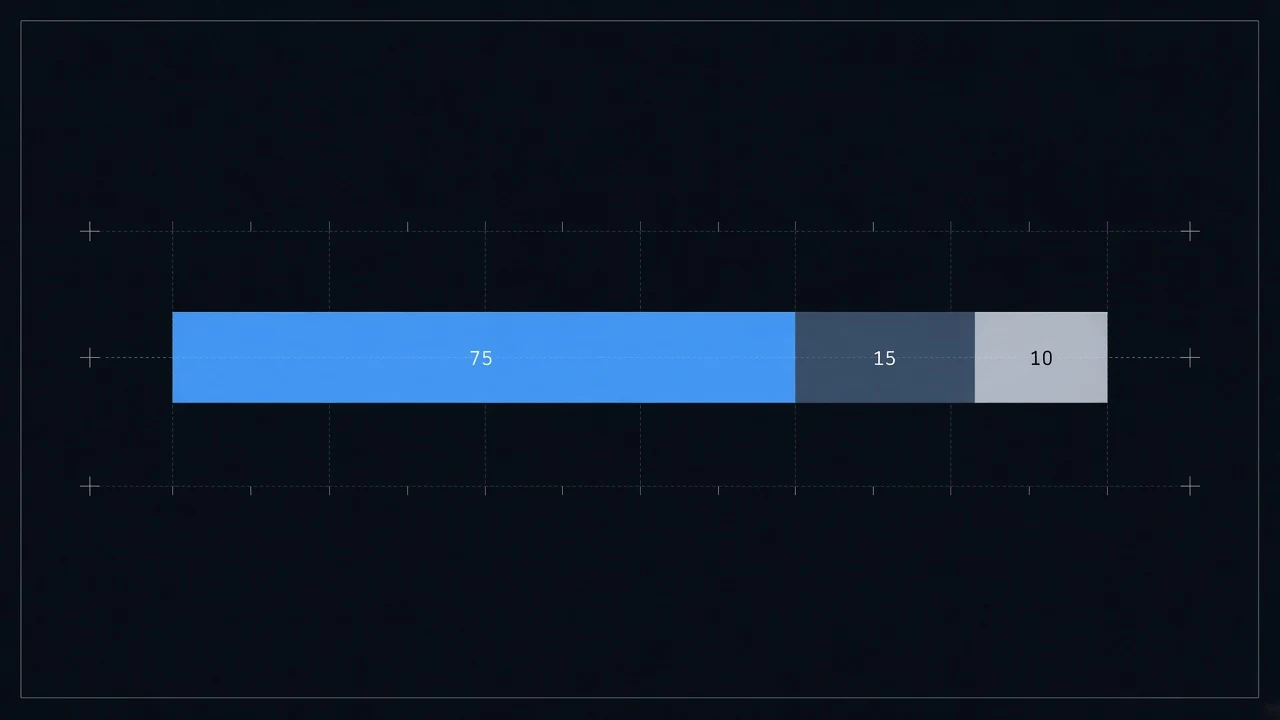
Every applicant gets an aggregate from the same formula: NET out of 200 carries 75%, HSSC (Part-1 if that is all you have) carries 15%, and SSC carries 10%. The merit formula post walks through the arithmetic. A-Level final-year candidates use 75% NET and 25% O-Level equivalence instead.
NUST does not rank everyone in one giant list. The merit criteria page has a programme-wise table, and each row is a separate "merit for" group: Engineering, Computing, Applied Sciences, Business Studies and Social Sciences, Architecture and Industrial Design, and the individual BS programmes such as Mathematics, Physics, Chemistry, Bioinformatics and Food Science. Each group picks up the NET paper that applies to it. If you sat both NET-Engineering and NET-Applied Sciences, programmes like BS Bioinformatics and BS Chemistry take your best score across both papers.
ACT and SAT candidates are ranked on separate lists. National ACT/SAT seats use the same 75/15/10 split with the ACT or SAT score in place of NET. International seats use the ACT or SAT score alone.
See how preferences affect an offer
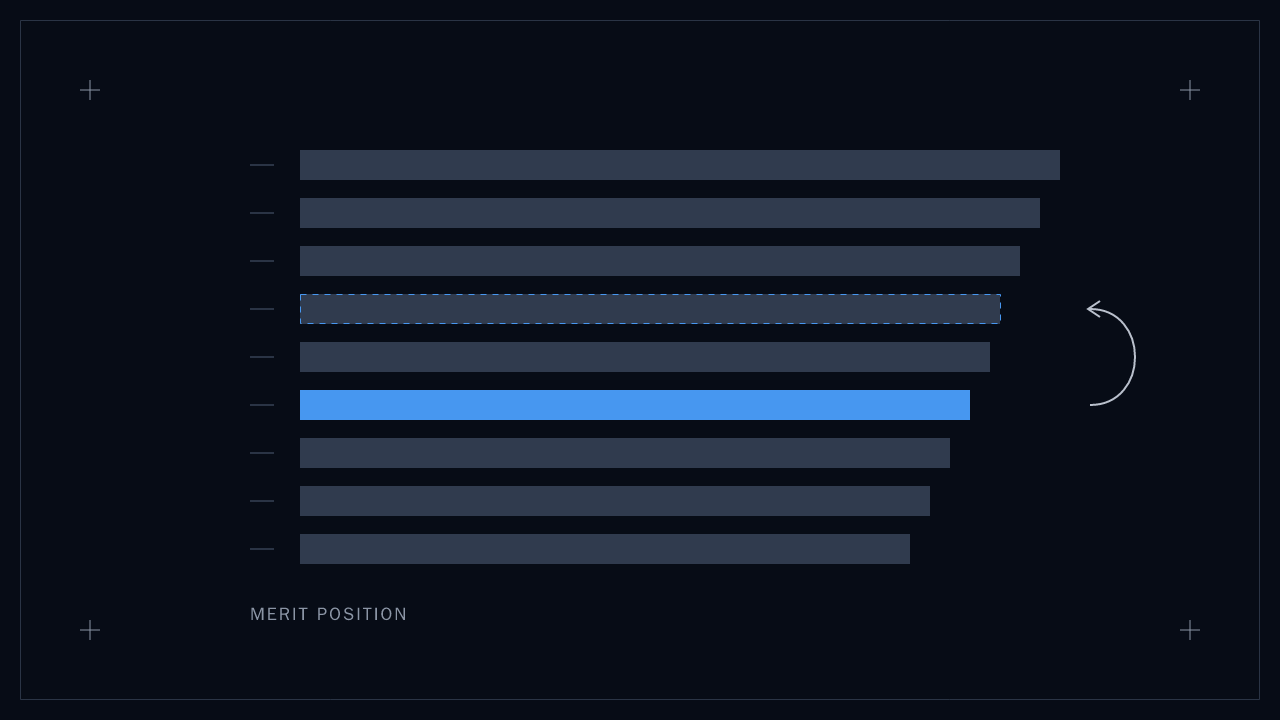
When you fill the online form, you list the programmes you want in order. NUST works down the merit list and gives each candidate the highest preference that still has a seat at their rank. If your first choice is full by the time NUST reaches your position, you get your second, and so on.
The selection process page sets two rules:
- You cannot be considered for a programme you did not select. If you leave it off, it does not exist for you.
- Pick only programmes you would actually join. Selecting ones you do not want can lead to fees you did not need to pay and a messy selection process.
After the merit list comes out, NUST gives you 1 to 2 days to edit your preferences within these disciplines: Engineering, Computing, Architecture and Industrial Design, Business Studies and Social Sciences, and Applied Sciences (BS Biotechnology, BS Environmental Science, BS Agriculture). Follow the current portal instructions and deadline if you need to change the order.
Understand later selection rounds
The first selection never fills every seat for good. Some selected candidates do not pay their dues. Others leave for another university. Each of those empty seats goes to the next person on merit, and that is what the later lists are.
NUST calls this upgradation. If you have paid your admission dues on time, you stay in the selection process, and you move up to a higher preference within the same discipline when a seat opens at your rank. Someone offered their fourth-choice engineering programme in the first list can end up in their second choice a few weeks later.
NUST does not announce in advance how many lists there will be. The selection process page says selection generally continues until the 2nd week after classes start at H-12, and then closes for good. After that, no admission is possible.
Read the action attached to an offer
The rules after you are selected trip up more people than the merit list itself.
| Situation | What NUST's rules say |
|---|---|
| You are selected and do not pay dues in time | You are out of the selection process for that discipline |
| You pay dues on time | You stay in the process and are upgraded by default as seats open |
| You want to keep your current programme | Submit the "Freezing the UG programme" form by the due date. Upgradation then stops |
| You want to reorder preferences after the edit window | Submit the "Change of Preferences" form with the prescribed fee. Allowed once only |
| You are selected on NET and ACT/SAT lists | You keep one seat of your choice |
Most of the damage happens in the first row. A candidate who gets a lower preference, decides to wait for a better list, and skips the payment falls out of that discipline's selection entirely. If you might want the seat, pay on time. You can still be upgraded after paying.
Both forms are on NUST's downloads page, and the deadlines are printed in your provisional selection letter.
Your next step
Use the campus guide to identify the place behind each school abbreviation, and the fee guide to plan payments.
If no offer has arrived, read closing merit before interpreting estimates. If the cycle finishes without a place, the next-options guide explains how to plan from that result.
Sources and scope
- Merit lists for NET and ACT/SAT seats are generated tentatively by the last week of July
- Aggregate on NET basis: NET 75%, HSSC 15%, SSC 10%
Source: NUST undergraduate selection process and merit criteria pages, checked October 2026