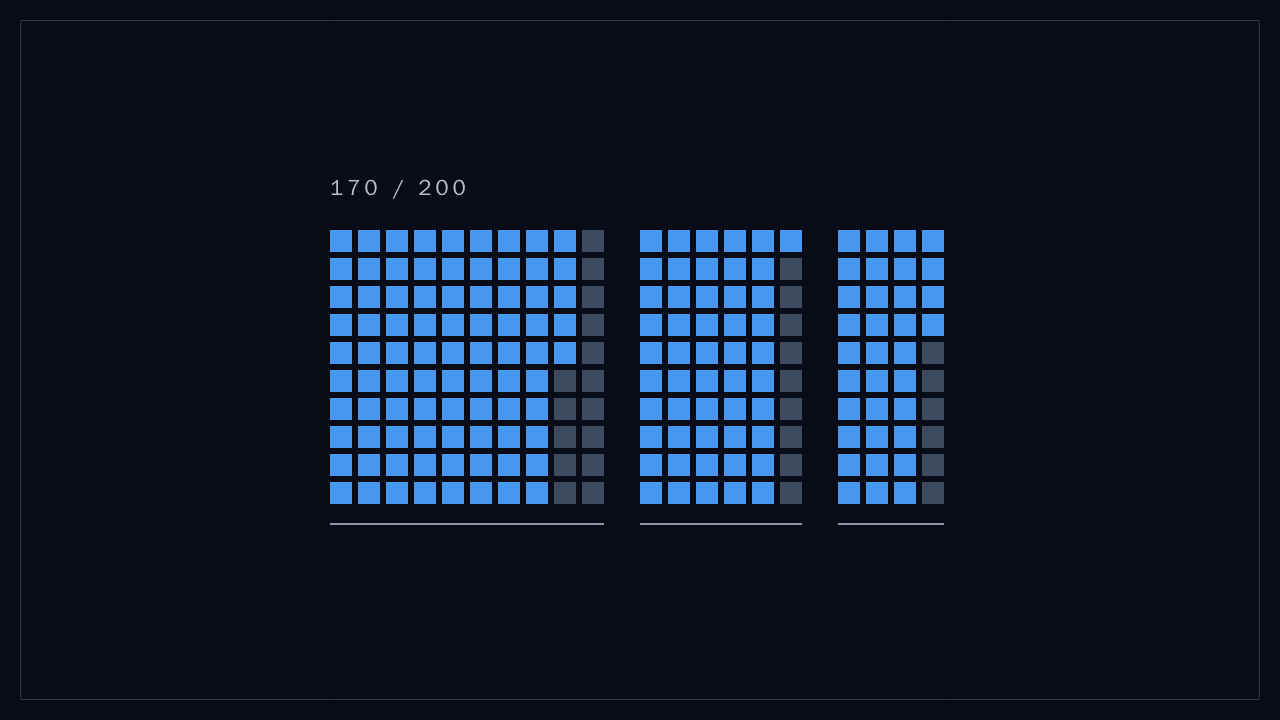
"Is 150 enough?" sounds like a question with one answer. For NUST admission, it leaves out your board marks, chosen programme, applicant pool and preference list.
A better starting question is what aggregate a given NET score produces for you. You can calculate that now. The eventual admission threshold depends on selection, so treat past figures as context rather than a promise.
Work backwards from your own aggregate
Use your actual marks or the accepted equivalence, not percentages borrowed from an example. Calculate your current aggregate, then try a few NET targets to see the difference.
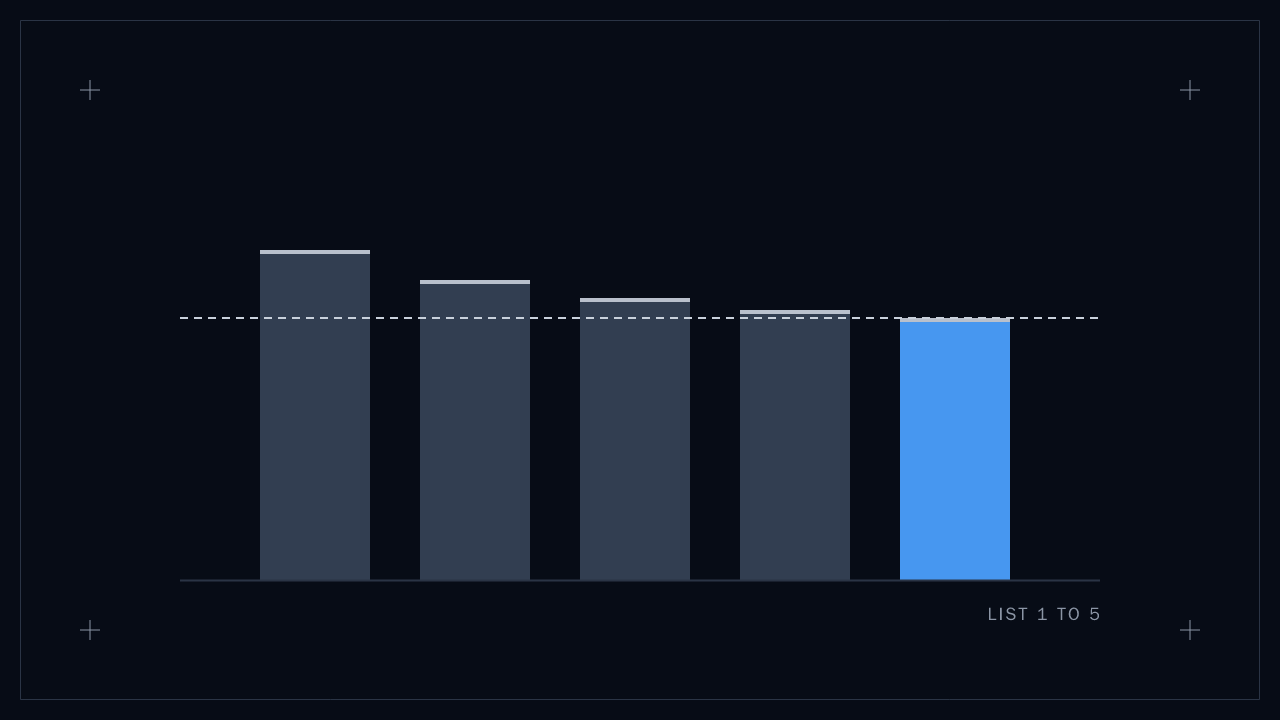
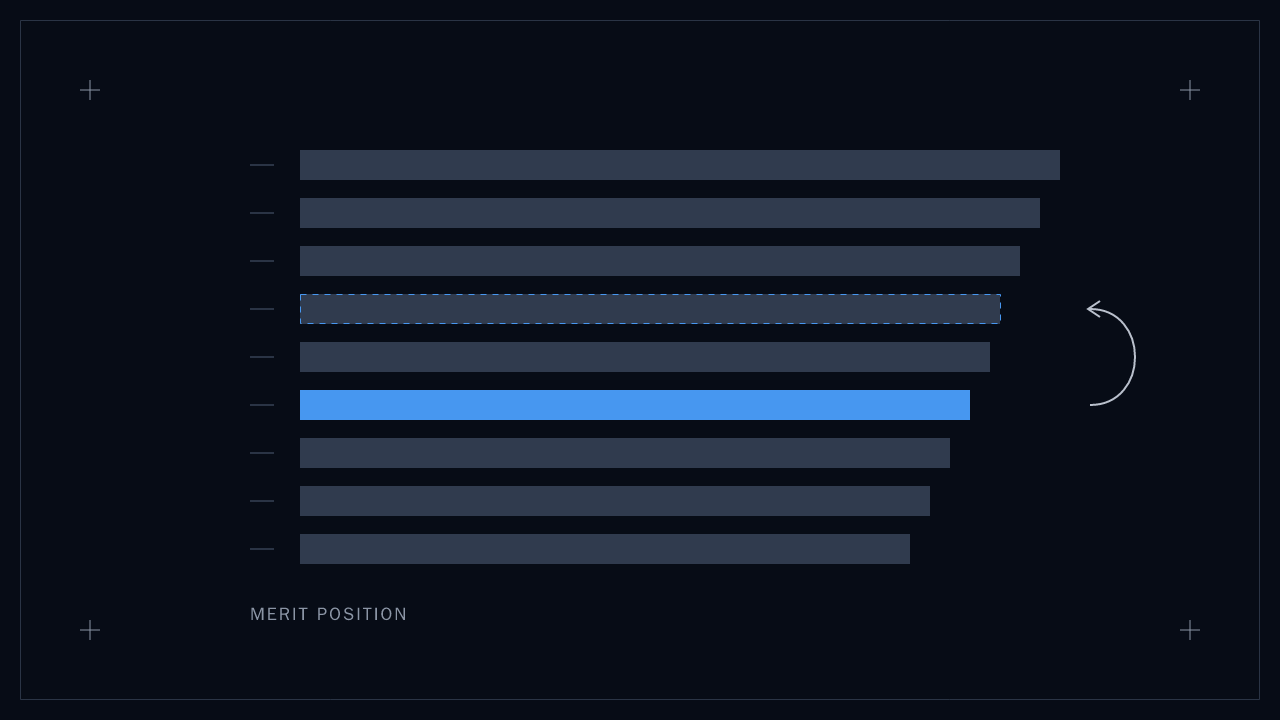
If you use a previous closing figure, record the year, programme, school and source. A first selection list is not necessarily the final closing position. A merit position is not an aggregate percentage.
Choose a preparation target that leaves room for uncertainty, then translate it into work. A target without a review of your weak topics is only a number on the page.
Understand the value of another mark
Start with the weights.
aggregate = (NET / 200) * 75 + HSSC% * 0.15 + SSC% * 0.10

one NET mark      = 75 / 200 = 0.375 aggregate points
one percent HSSC  = 0.15 aggregate points
one percent SSC   = 0.10 aggregate points
Ten more NET marks add 3.75 aggregate points. Getting the same 3.75 points from HSSC would take 25 percentage points. This is why NET is the only part you can still move in a big way: your school marks are mostly fixed by the time you sit it.
See why board marks change the answer
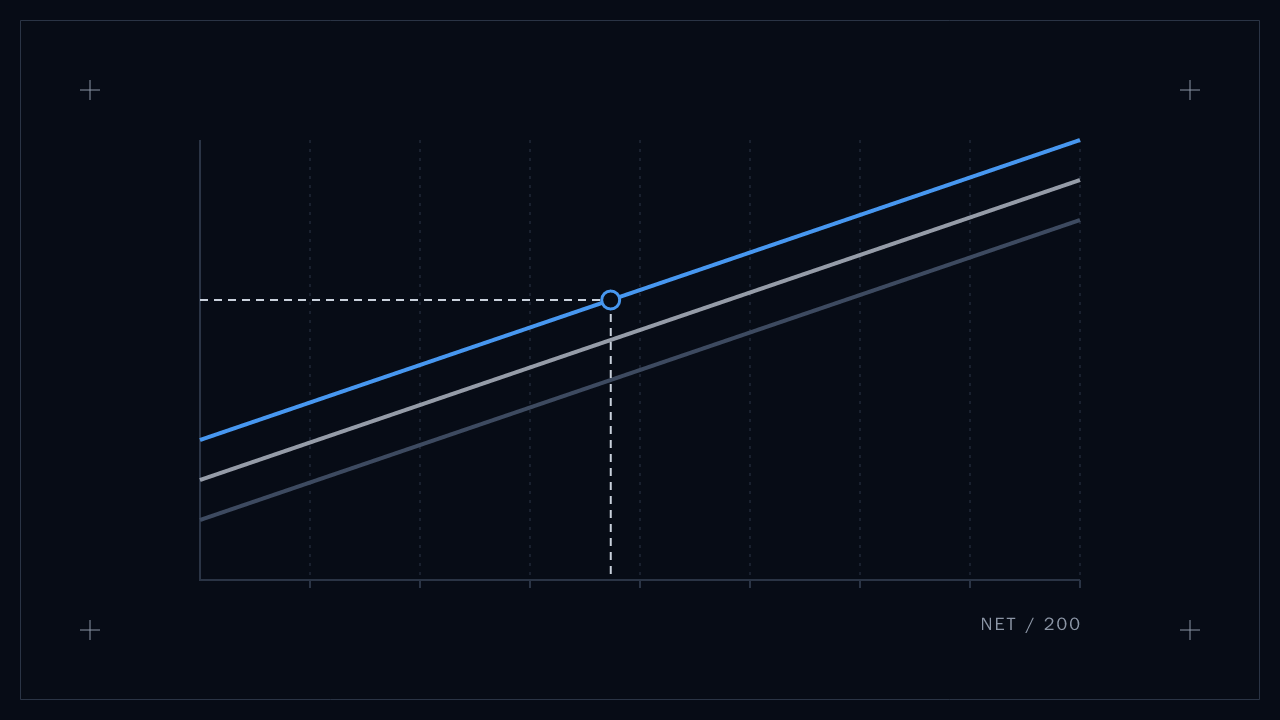
Here are three made-up students with different school results. The numbers are straight from the formula, using percentages for SSC and HSSC.
| NET out of 200 | Student A: HSSC 70%, SSC 75% | Student B: HSSC 80%, SSC 85% | Student C: HSSC 90%, SSC 92% |
|---|---|---|---|
| 100 | 55.50 | 58.00 | 60.20 |
| 120 | 63.00 | 65.50 | 67.70 |
| 130 | 66.75 | 69.25 | 71.45 |
| 140 | 70.50 | 73.00 | 75.20 |
| 150 | 74.25 | 76.75 | 78.95 |
| 160 | 78.00 | 80.50 | 82.70 |
| 170 | 81.75 | 84.25 | 86.45 |
| 180 | 85.50 | 88.00 | 90.20 |
Read across a row. Student C's school marks are worth 4.7 more aggregate points than Student A's. That gap equals about 12.5 NET marks. A strong FSc helps, but a candidate with weaker marks can close the gap with one good series.
Calculate an illustrative score target
Flip the formula to find the NET score you need:
NET needed = (target aggregate - HSSC% * 0.15 - SSC% * 0.10) / 75 * 200
For the same three students:
| Target aggregate | Student A | Student B | Student C |
|---|---|---|---|
| 65 | 126 | 119 | 113 |
| 70 | 139 | 132 | 127 |
| 75 | 152 | 146 | 140 |
| 80 | 166 | 159 | 153 |
NET scores are whole marks, so round up. If your answer is above 200, the target is out of reach on NET basis, and it is time to look at other preferences.
Your next step
Try the aggregate calculator with your own results. Read closing merit and selection lists before treating any estimate as an outcome.
Then use chapter practice and full papers to identify changes you can make. The 170-score guide explains accuracy and coverage without claiming that one score guarantees admission.
Sources and scope
- NET 75%, HSSC 15%, SSC 10% of the aggregate
- A-Level final-year: NET 75%, O-Level equivalence 25%
Source: NUST merit criteria page, checked October 2026